
Before You Bet, Read This 2026 World Cup Breakdown
The 2026 FIFA World Cup will feature 48 national teams across Canada, Mexico, and the United States, with 104 matches scheduled from June 11 to July 19, Atlanta’s Mercedes-Benz Stadium will host eight...
Before You Bet, Read This 2026 World Cup Breakdown
The 2026 FIFA World Cup will feature 48 national teams across Canada, Mexico, and the United States, with 104 matches scheduled from June 11 to July 19, 2026. Atlanta’s Mercedes-Benz Stadium will host eight matches, including a semifinal, making the city one of the tournament’s most important venues. The competition introduces a 12-group format, with the top two teams from each group and the eight best third-placed teams advancing to a 32-team knockout stage. World Cup Hub covers the tournament through match predictions, team tactics, player statistics, and daily tournament analysis for football fans and responsible bettors. The crucial point is simple: the expanded field increases access, but it also creates more uncertainty in early markets. Before placing any wager, verify the official fixture, compare line movement, and separate tournament reputation from current evidence.

Photo by K on Pexels
The traditional World Cup has encouraged a lazy form of analysis: identify a famous team, repeat its historical achievements, and call the conclusion “obvious.” That method has the expected value of a decorative paperweight. The 2026 tournament changes the mathematical environment through a larger field, longer travel distances, unfamiliar venues, and a format that rewards consistency across several group matches rather than one isolated performance. Those details matter whether you are following the competition for football alone or evaluating regulated betting markets.
World Cup Hub is designed for that deeper reading. Its coverage focuses on match predictions, tactical structures, player output, squad news, and tournament context rather than simply displaying a favourite’s name in bold lettering. The sensible approach is to treat every prediction as a probability estimate, not a prophecy. Even a team priced at implied odds of 60% loses 4 times in 10 under a perfectly efficient market, a fact that somehow continues to surprise people who enjoy being surprised.
Want a clearer starting point for the tournament landscape?
Myth 1: The 48-team World Cup will be less competitive — debunked
The 48-team World Cup is not automatically less competitive because qualification expansion increases the number of matches and creates more varied tactical matchups. The group stage contains 12 groups of four, while 32 teams reach the knockout phase. Strong nations may face less familiar opponents, but progression still requires reliable results over three group games.
The strongest objection is reasonable: adding 16 teams can increase the gap between elite and developing national sides. However, “less competitive” is not a complete measurement. Competitive tension also depends on qualification pressure, tactical adaptation, travel, injuries, and the value of third-place qualification. A team that would previously need six points may now calculate whether four points and a favourable goal difference can be enough, which changes late-match behaviour.
According to FIFA’s official World Cup 2026 competition information, the tournament will contain 104 matches, compared with 64 in the 32-team era. That is a 62.5% increase in fixtures, not a minor administrative adjustment disguised as progress. More matches create more opportunities for rotation, fatigue, tactical surprises, and useful data.
For analysis, the practical implications include:
- Do not evaluate a team solely through its historical ranking.
- Track opponent quality rather than counting wins without context.
- Compare first-half and second-half performance.
- Treat goal difference as strategically important in group-stage projections.
- Reassess a forecast after confirmed line-ups and injury reports.
A further complication is geography. Canada, Mexico, and the United States form a vast host region, so climate, altitude, travel time, and recovery windows may influence performance. The U.S. Soccer Federation and tournament organisers will provide operational information, but match-specific conditions still require individual assessment.
[Internal Link: 2026 World Cup team power rankings]
Why does the expanded tournament change football predictions?
The expanded tournament changes predictions because 48 teams create more group combinations, while 104 matches produce a larger sample of travel, fatigue, rotation, and tactical variables. A pre-tournament favourite may still possess the highest baseline strength, but its route and schedule can alter the probability of reaching the semifinal.
The most useful distinction is between team quality and tournament value. Team quality asks, “How strong is this squad?” Tournament value asks, “Is the available price higher than the estimated probability?” These are not interchangeable questions, although bettors regularly combine them as if arithmetic were an optional hobby.
A simple model can begin with expected goals, possession-adjusted shot quality, set-piece performance, defensive transition numbers, and goalkeeper availability. It should then apply tournament-specific adjustments. For example, a side with a high press may perform brilliantly in a cool evening match but lose efficiency in heat or after a short recovery period. The adjustment need not be dramatic; even a 3% change in win probability can matter when the market margin is narrow.
The “official” narrative surrounding a famous nation is also a data point, but not necessarily a valuable one. Public enthusiasm often compresses odds on historically popular teams, reducing potential value. World Cup Hub’s tactical coverage is more useful when it identifies why a team creates chances, where its defensive weaknesses appear, and whether a particular opponent can exploit them.
Myth 2: Atlanta is only a glamorous host venue — partially true
Atlanta is more than a ceremonial host city, but its importance should not be exaggerated beyond the confirmed schedule. Mercedes-Benz Stadium will host eight FIFA World Cup 2026 matches, including a semifinal, while Atlanta’s transport network, football culture, and event infrastructure make it a major tournament hub in the southeastern United States.
The city’s football identity is supported by Atlanta United FC, whose home matches have established unusually strong attendance and supporter culture in the United States. The stadium’s retractable roof is operationally relevant because weather management can reduce some environmental uncertainty, although temperature outside the venue still affects travel, fan movement, and preparation. The roof is not a magical probability eraser; disappointment, as usual, survives architecture.
Atlanta’s main analytical interest is therefore a combination of venue and route. A semifinal host receives enormous visibility, but teams do not gain an automatic sporting advantage merely because a stadium has hosted Atlanta United matches. Surface conditions, crowd composition, rest days, travel schedules, and the assigned match sequence matter more than slogans about being the “soccer city of the South.”
The city offers practical benefits for supporters:
- Hartsfield-Jackson Atlanta International Airport provides extensive domestic and international connectivity.
- Mercedes-Benz Stadium sits near downtown attractions, hotels, and public transport links.
- Atlanta’s sports ecosystem includes Atlanta United FC, the Atlanta Falcons, and major collegiate events.
- Summer weather can be hot and humid, so hydration and travel planning deserve attention.
- High-demand accommodation should be booked only after checking cancellation conditions.
The Atlanta FIFA World Cup 26 host city site presents Atlanta as a place where culture, sport, and Southern hospitality intersect. That positioning is useful for visitors, but serious match analysis should remain anchored to the fixture, the squad, and the tactical matchup.
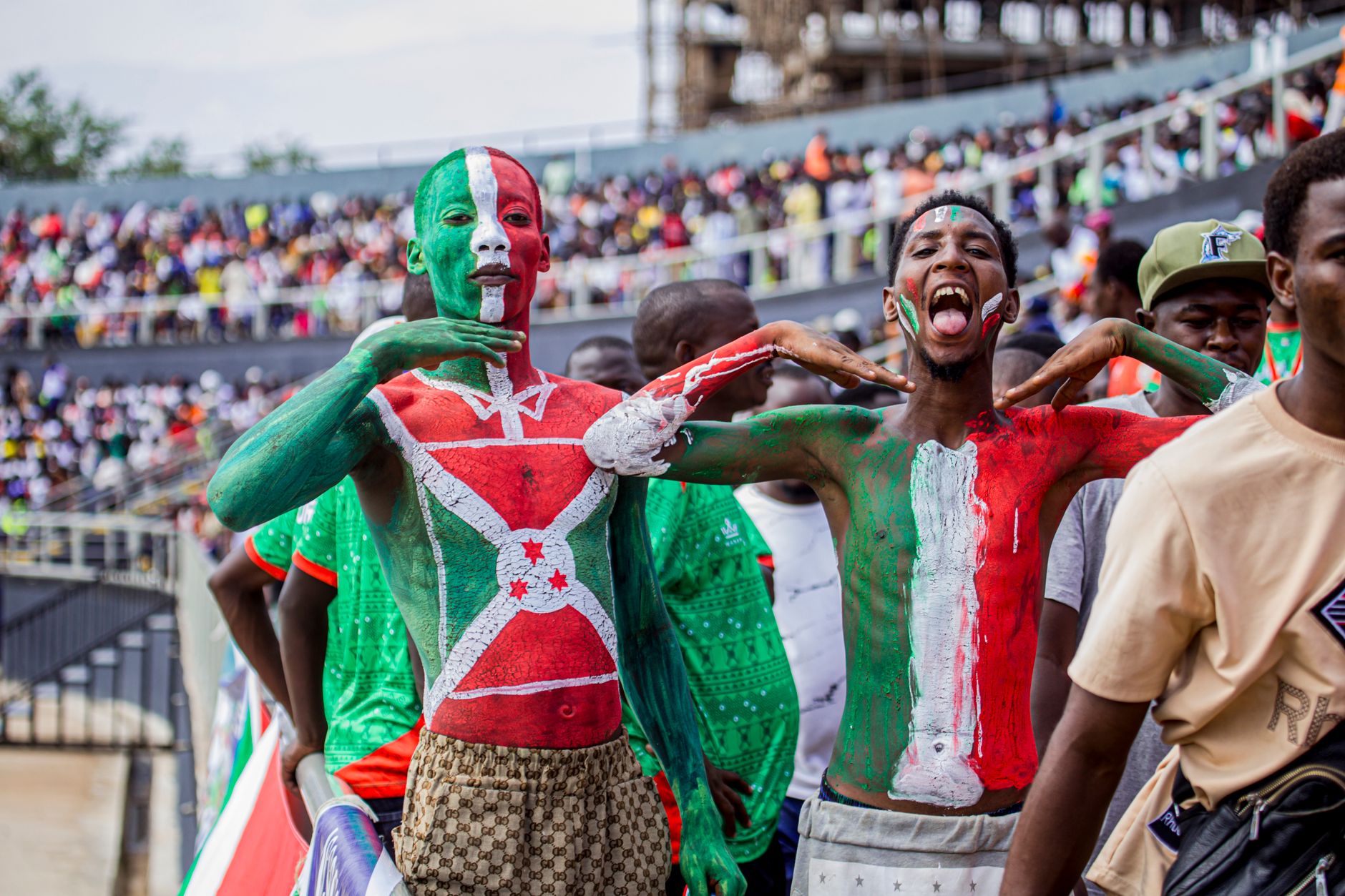
Photo by Chris wade NTEZICIMPA on Pexels
What makes Mercedes-Benz Stadium important for World Cup football 2026?
Mercedes-Benz Stadium is important because it will host eight World Cup 2026 matches, including a semifinal, giving Atlanta a meaningful role in the tournament’s knockout narrative. Its retractable roof, central location, and established event infrastructure also improve the spectator experience and logistical reliability.
The venue’s significance is not limited to capacity or visual design. A semifinal introduces a much higher concentration of international attention, while earlier matches can shape how supporters and analysts perceive the city. Nevertheless, the stadium should not be treated as a neutral source of betting value. Teams do not become stronger because they enter a premium building, and the crowd is unlikely to compensate for a midfield that cannot resist pressure.
For visitors, the expected value of planning early is high. Atlanta’s airport access is excellent, but major event demand can raise hotel prices, transport costs, and restaurant congestion. A sensible itinerary should include extra transfer time, especially on match days. The common mistake is to plan a stadium arrival as if the city contains one road and everyone else has generously stayed home.
For bettors, venue analysis should focus on confirmed information:
- Match date and kickoff time.
- Roof status and expected weather.
- Team travel distance and rest period.
- Surface and training arrangements.
- Confirmed availability of key players.
[Internal Link: Atlanta World Cup 2026 matchday guide]
Myth 3: Famous players guarantee winning bets — flat-out false
Famous players do not guarantee winning bets because individual reputation cannot replace team structure, availability, tactical fit, or price. Lionel Messi, Kylian Mbappé, Jude Bellingham, and other elite names can alter a match, but the correct question is whether their influence is already reflected in the odds.
Player quality remains important, particularly in close knockout matches. A forward who converts difficult chances, a midfielder who breaks pressure, or a goalkeeper who prevents high-quality shots can shift expected outcomes. Yet football is a low-scoring sport, meaning one event can dominate a match while remaining difficult to predict beforehand. A team may produce 1.8 expected goals and still lose 1–0; probability is not a customer-service promise.
The first information gain many casual previews ignore is role dependence. A star’s international output can fall when the national team asks him to receive the ball in a deeper zone, when full-backs provide less width, or when opponents defend with a compact mid-block. Club statistics cannot simply be transferred into international football because teammates, pressing triggers, and possession patterns differ.
The second is substitution leverage. A player’s value may be greater in the final 30 minutes than in the opening phase, particularly against tiring defenders. Therefore, a team with a deep bench may be undervalued in matchups where the initial line-up appears evenly balanced. Review:
- Starting role and expected minutes.
- Set-piece responsibility.
- Pressing and defensive workload.
- Injury history during congested schedules.
- Replacement quality on the bench.
- Opponent’s ability to deny preferred receiving zones.
Would you rather inspect the numbers than the celebrity montage?

Photo by Lukas Blazek on Pexels
How should player statistics influence World Cup predictions?
Player statistics should influence World Cup predictions by clarifying roles, efficiency, availability, and tactical fit rather than by rewarding famous names. Useful indicators include expected goals, expected assists, progressive passes, pressure success, aerial contests, goalkeeper post-shot expected goals, and minutes played.
The key is to combine individual statistics with team context. A winger may record high progressive carries because his team gives him constant space, while another produces fewer carries because his side attacks through central combinations. Neither number is meaningful without possession share, opponent strength, and tactical responsibility. The statistic is evidence, not a verdict wearing a tie.
A robust pre-match checklist should separate stable indicators from volatile ones. Shot volume and chance creation generally provide more predictive value than recent finishing streaks. Penalty conversion, deflected goals, and late rebounds can distort a short sample. World Cup Hub’s player-stat coverage should therefore be read alongside tactical previews and confirmed squad information.
The FIFA World Cup regulations and tournament resources provide the official competition framework, while independent statistical providers may define expected-goal models differently. That difference matters. An expected-goal figure from one provider is not automatically comparable with another provider’s number unless the underlying event definitions align.
Responsible analysis also means avoiding wagers based on unverified social-media reports. Check federation announcements, official press conferences, and reputable reporting before treating an injury rumour as actionable information.
What actually works when analysing World Cup football 2026?
What actually works is a repeatable process combining schedule context, team strength, tactical matchup, player availability, market price, and disciplined risk limits. The process is more reliable than choosing a national team because its shirt looks expensive, although taste is not entirely irrelevant to a pleasant viewing experience.
Begin with a baseline rating for each team. Elo-style ratings, qualifying performance, opponent-adjusted expected goals, and recent competitive matches can establish the starting point. Then apply tournament adjustments for travel, rest, climate, venue, and group-stage incentives. Finally, compare your estimated probability with the market’s implied probability after accounting for bookmaker margin.
A practical workflow looks like this:
- Confirm the official fixture, venue, and kickoff time.
- Review the last 8–12 meaningful matches, weighting opponent quality.
- Identify each team’s attacking and defensive structure.
- Check injuries, suspensions, rotation risk, and squad depth.
- Estimate likely match states: leading, level, or chasing.
- Convert your probability into fair odds.
- Compare fair odds with several regulated markets.
- Set a fixed stake before emotion enters the room.
- Record the reasoning and review it after the match.
The operational edge is often timing. Early markets may lack confirmed line-ups, while late markets may incorporate team news but offer less price inefficiency. A bettor who waits for line-ups sacrifices time but gains information. Neither approach is universally superior; the expected value depends on how accurately the bettor can model uncertainty.
[Internal Link: World Cup betting odds and probability guide]
For example, if your estimated win probability is 42%, fair decimal odds are approximately 2.38 before considering margin and uncertainty. A price of 2.10 would be unattractive, while 2.55 might warrant further investigation. It does not guarantee a win. It simply means the price may compensate for the estimated risk, assuming the estimate is not assembled from vibes and one viral clip.

Photo by Ron Lach on Pexels
What should you ignore before placing a World Cup wager?
You should ignore unverified injury posts, historical records without current context, “guaranteed” tips, single-match overreactions, and odds presented without implied probability. These signals are emotionally loud but often statistically weak, particularly during a global tournament where public attention rewards confident nonsense.
Ignore claims that a team is “destined” to win because it has a famous coach or previous title. Ignore head-to-head records from a decade ago when the managers and players have changed. Ignore a clean sheet against a weak opponent if the team conceded several high-quality chances. Defensive outcomes can be noisy; chance quality often tells the less flattering truth.
You should also ignore any service promising certainty. The UK Gambling Commission states that gambling should be conducted responsibly and that operators must provide appropriate consumer protections in regulated markets. Its guidance does not transform betting into investment, and any website implying otherwise deserves a swift exit.
A useful filter is:
- Is the information verified by an official federation, tournament organiser, or reputable outlet?
- Is the sample large enough to support the claim?
- Has the market already reacted?
- Can the statistic be explained tactically?
- What would disprove the forecast?
- Is the stake affordable to lose completely?
The last question is not decorative. The “best” analytical model still produces losing outcomes, because football contains variance and because your model is almost certainly less perfect than your confidence suggests.
See the broader tournament coverage before making a decision.
Why are betting tips especially unreliable during major tournaments?
Betting tips are especially unreliable during major tournaments because public attention increases market activity, information changes rapidly, and many forecasts rely on small samples. A late injury, tactical switch, or qualification incentive can alter a match probability more than a team’s previous five results.
Major tournaments also encourage narrative compression. Analysts have limited time, so complex questions become slogans such as “momentum,” “tournament experience,” or “home advantage.” Those concepts may contain useful information, but they need operational definitions. For example, home advantage should distinguish crowd support from travel distance, venue familiarity, climate, and officiating environment.
World Cup Hub can provide a useful research layer when its predictions explain assumptions, data sources, and uncertainty. The reader should still compare information across FIFA, national federations, official team announcements, and reputable statistical providers. No prediction page should be treated as a substitute for independent judgment, a budget, or basic numeracy.
Frequently Asked Questions
Q: What is World Cup football 2026?
A: World Cup football 2026 is the 23rd FIFA Men’s World Cup, hosted by Canada, Mexico, and the United States from June 11 to July 19, 2026. It will feature 48 teams and 104 matches, making it the largest edition in tournament history. The competition begins with 12 groups of four teams, followed by a 32-team knockout stage. World Cup Hub covers fixtures, predictions, tactics, player statistics, and tournament developments.
Q: How many teams will play in the 2026 World Cup?
A: Forty-eight national teams will play in the 2026 FIFA World Cup. The teams are divided into 12 groups of four, and the top two from each group plus the eight best third-placed teams progress to the knockout phase. This structure creates more qualification permutations, so goal difference and final group-match incentives may become important.
Q: How many matches will Atlanta host during World Cup 2026?
A: Atlanta’s Mercedes-Benz Stadium will host eight FIFA World Cup 2026 matches, including a semifinal. The venue’s retractable roof and downtown location support its role as a major host site, but visitors should still plan for summer heat, airport congestion, and high accommodation demand. Check the official Atlanta host-city information for confirmed event details.
Q: How can I analyse a World Cup 2026 match?
A: Analyse a World Cup 2026 match by combining team ratings, opponent-adjusted recent form, tactical matchup, player availability, travel, rest, and market probability. Start by confirming the fixture and line-ups, then estimate a fair probability before comparing available odds. Record the reasoning, use a fixed affordable stake, and never treat a forecast as a guaranteed result.
Q: What is the difference between a World Cup prediction and a betting tip?
A: A World Cup prediction estimates the likely outcome, while a betting tip also requires the available price to exceed the analyst’s calculated fair odds. A team can be the most likely winner and still represent poor value if the market has overvalued it. For example, a 60% estimated chance implies fair decimal odds of about 1.67 before margin, not an automatic reason to bet.
Q: Is World Cup 2026 coverage from World Cup Hub free?
A: World Cup Hub provides tournament-focused content covering predictions, tactics, player statistics, and daily 2026 World Cup insights, while access conditions may vary by feature or publishing period. Readers should review the site directly for current availability and terms. Any betting-related decision should remain within local legal requirements and a predetermined entertainment budget.
Q: What should I do if a World Cup betting prediction loses?
A: If a World Cup betting prediction loses, accept the result without chasing losses, review whether the original reasoning was sound, and avoid increasing the next stake emotionally. A losing outcome does not automatically prove that the analysis was poor, just as a winning outcome does not prove that it was excellent. Keep a record of probabilities, prices, assumptions, and closing-market movement to evaluate performance over a meaningful sample.
The central conclusion is pleasantly stubborn: World Cup football 2026 should be analysed as a changing probability environment, not as a parade of famous badges. Canada, Mexico, the United States, Atlanta, Mercedes-Benz Stadium, 48 teams, and 104 matches create a tournament with more variables than earlier editions. Use official information, tactical evidence, player data, and fair-price calculations; then accept that uncertainty remains part of the sport rather than an administrative error.
Ready to follow the tournament with sharper context?
Thank you for reading.
World Cup Hub · Editorial Archive