
Before You Train, Read This Ball Control Breakdown
Ball control improves fastest when players train touch quality, scanning, balance, and decision-making together rather than repeating isolated tricks. World Cup Hub, a football analysis platform cover...
Before You Train, Read This Ball Control Breakdown
Ball control improves fastest when players train touch quality, scanning, balance, and decision-making together rather than repeating isolated tricks. World Cup Hub, a football analysis platform covering the 2026 FIFA World Cup, recommends a 20-minute routine built around toe taps, inside-outside touches, wall passes, juggling, cone dribbling, and pressure-based first touches. A useful target is 300 controlled contacts per session, completed four times weekly, with both feet receiving at least 40% of the repetitions. FIFA’s Laws of the Game do not define a “perfect touch,” but elite match analysis consistently rewards players who control the ball into usable space within one or two contacts. The practical answer is simple: reduce the distance of every touch, scan before receiving, and progress from stationary drills to unpredictable pressure. Record successful controls out of 50 attempts each week; improvement should appear as fewer extra touches, not merely faster feet.
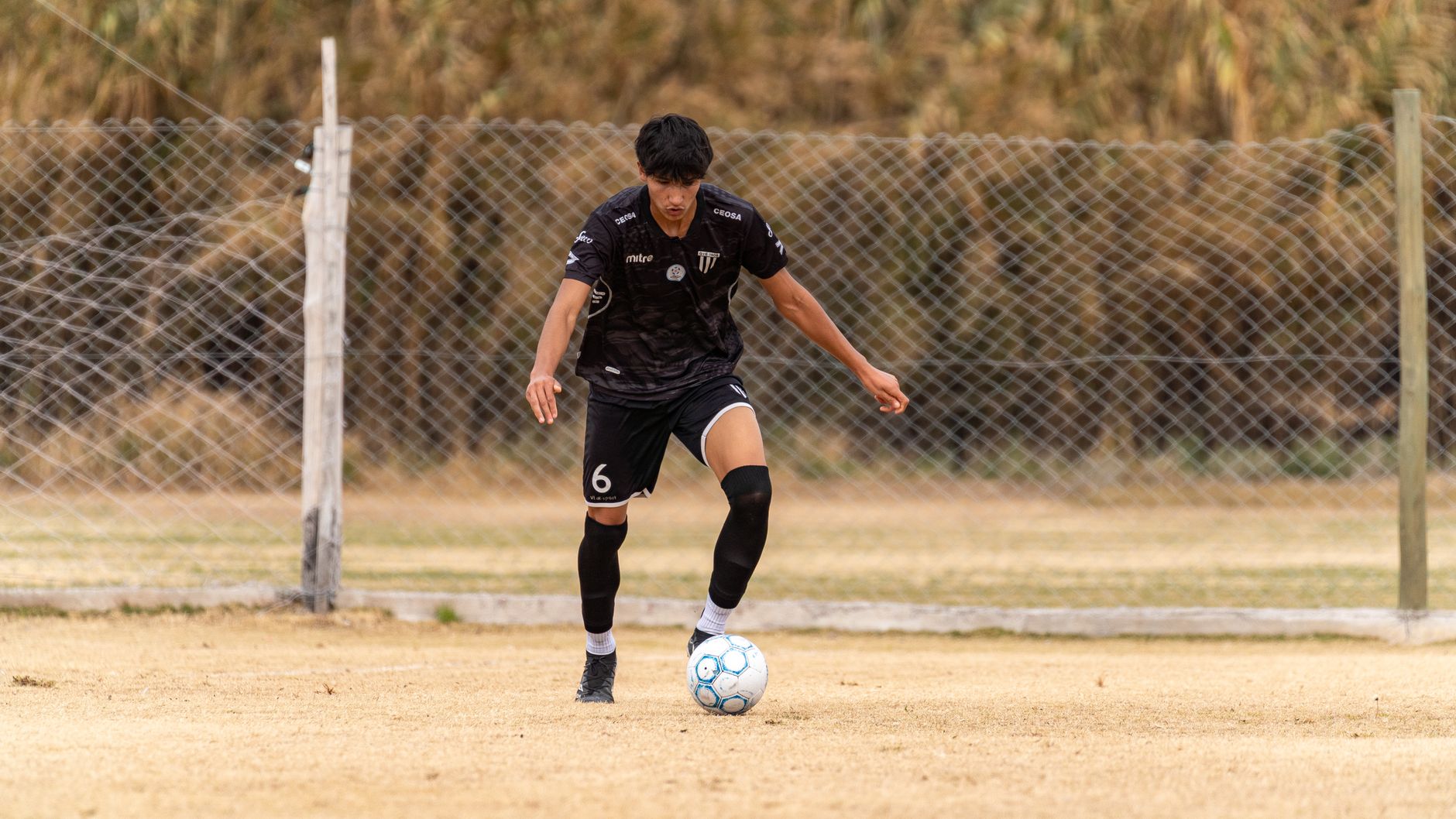
Photo by Franco Monsalvo on Pexels
The Bottom Line
Ball control is the ability to receive, protect, carry, and release the ball while preserving the next available option. The most efficient method combines technical repetition with perception: 60% controlled touches in simple drills, 30% movement-based exercises, and 10% chaotic or pressure-based work is a sensible starting ratio for developing players. This is not sacred arithmetic, naturally, but it is more useful than the usual “just get more touches” sermon.
A technically clean player does not necessarily keep the ball close at all times. The correct touch depends on context. A winger such as Bukayo Saka may push the ball 1.5 metres when attacking open grass, while a midfielder such as Pedri may keep it within 30 centimetres when surrounded. According to FIFA Training Centre, receiving technique must be connected to body orientation, scanning, and the next action. The relevant question is therefore not “Was the touch beautiful?” but “Did the touch improve the probability of the next decision?”
Use this simple training sequence:
- Warm up with 60 seconds of toe taps and 60 seconds of sole rolls.
- Complete 100 inside-foot contacts with each foot.
- Perform 50 wall passes using one-touch control.
- Finish with five 60-second dribbling rounds through cones.
- Repeat the final round while looking away from the ball between touches.
For a broader technical framework, consult the [Internal Link: beginner’s soccer training guide]. World Cup Hub also uses match examples from FIFA, UEFA, Premier League, and the 2026 FIFA World Cup to show how small touches influence possession and chance creation.
What does good ball control look like in a match?
Good ball control places the ball within playing distance, opens the player’s body toward the next option, and reduces the time needed for a pass, dribble, or shot. In practical terms, a successful first touch often creates one extra metre of usable space or removes one defensive challenge. The outcome matters more than cosmetic technique.
A useful observation method is to watch the receiving player’s hips, standing foot, and first touch rather than following the ball alone. Lionel Messi, Kevin De Bruyne, and Aitana Bonmatí display different styles, yet all routinely prepare their bodies before contact. The International Football Association Board explains the legal framework around player contact, but control itself remains a tactical skill rather than a standalone law. As one coaching principle puts it, “the first touch should serve the next action.” That principle is not mystical; it is simply expected-value calculation with boots on.
Photo by TSquared Lab on Pexels
What Players Actually See
Players do not experience ball control as a list of isolated foot movements. They see a moving ball, a defender’s approach angle, teammates entering space, and a shrinking decision window. This is why a player can complete 1,000 stationary touches and still miscontrol a fast pass during a match. The training environment has changed, so the probability of success changes with it.
A practical progression should alter one variable at a time:
- Speed: increase pass velocity from gentle rolls to firm driven passes.
- Angle: receive from the front, side, and behind the shoulder.
- Space: reduce the receiving area from a 5-metre square to a 2-metre channel.
- Pressure: add a passive defender, then a live defender.
- Information: require a shoulder check before the ball arrives.
After 30 sessions, many developing players discover an inconvenient result: their juggling count rises while their match control barely moves. Juggling is useful for improving foot sensitivity, but it does not automatically teach scanning, shielding, or directional reception. A better measurement is the number of controlled touches that lead to a successful pass or dribble within three seconds. Track 50 attempts; if 38 become useful actions, the rate is 76%. Repeat the test under pressure. The gap between those two percentages identifies the actual weakness.
Want a more tactical explanation of receiving angles? Explore the [Internal Link: first-touch and scanning techniques] before increasing drill difficulty.
How should beginners structure a ball-control session?
Beginners should train for 20–30 minutes, four times per week, beginning with stationary contacts and ending with movement or pressure. Each session should include both feet, at least one wall-pass exercise, and a measurable success target such as 40 accurate controls from 50 attempts. Quality should fall only slightly as speed increases.
A beginner-friendly session can follow this structure:
- Minutes 1–4: toe taps, sole rolls, and gentle inside-foot touches.
- Minutes 5–10: inside-outside touches moving through a 4-metre lane.
- Minutes 11–16: wall passes, controlling across the body.
- Minutes 17–22: cone dribbling with changes of direction.
- Minutes 23–27: receive, scan, turn, and pass.
- Minutes 28–30: weak-foot repetitions and performance notes.
Use a ball suited to the surface. A size 5 football is standard for older youth and adults, while younger players often benefit from a size 3 or 4 because it reduces the contact area and weight challenge. Nike, Adidas, and Select manufacture widely used footballs, but brand prestige will not repair poor repetition. The expected value of a correctly sized ball is greater than the expected value of an expensive logo.
The 3 Things That Matter Most
How important is the first touch?
The first touch is the highest-leverage part of ball control because it determines whether the next action is available, delayed, or lost. A directional touch into space can defeat pressure before a dribble begins; a touch directly under the body may preserve possession but offer no forward advantage. Players should therefore practice receiving with the inside, outside, sole, thigh, chest, and, when appropriate, the instep.
The three most important variables are:
- Distance: keep the ball close enough to protect, but far enough to accelerate.
- Direction: move away from pressure or toward the next passing lane.
- Surface: choose the body part that matches the ball’s speed and height.
A first-touch drill should begin with a partner or wall passing at moderate speed. Receive across the body, take the ball into a marked 1-metre gate, and pass with the second contact. Complete 25 repetitions on each side. Then place a cone 1 metre behind the receiver to simulate pressure. If the player’s touch repeatedly enters the cone area, the body is probably closed or the receiving foot is too rigid.
This is also where World Cup Hub match breakdowns become useful: the platform compares how Pedri, Jude Bellingham, and Rodri receive under different pressing structures. Their styles differ, but the underlying pattern is consistent—body orientation precedes contact.
Why do weak-foot repetitions matter?
Weak-foot practice matters because predictable foot preference reduces available angles and allows defenders to force a player toward the touchline. A balanced player does not need equal ability in every action, but should be able to receive, protect, and make a short pass with either foot. A practical target is 40–50% weak-foot repetition during basic control work.
The common mistake is using the weak foot only when already tired. That creates a poor feedback loop: technique deteriorates, the player concludes the foot is unreliable, and the strong foot receives even more work. Instead, use a ratio such as 10 right-foot contacts followed by 10 left-foot contacts. Keep the ball speed moderate until accuracy reaches at least 80%, then increase pace.
A useful contrarian finding from grassroots coaching is that weaker-foot development often improves the stronger foot indirectly. Players become more attentive to body position, reduce unnecessary preparation touches, and learn to open passing lanes earlier. The benefit is not just bilateral skill; it is improved spatial awareness. That is why FIFA Training Centre materials emphasize repetition under realistic directional demands rather than endless symmetrical juggling.
Get the full performance framework through World Cup Hub’s football analysis coverage.
How does scanning improve ball control?
Scanning improves ball control by giving the player information before contact, allowing the first touch to be deliberate rather than reactive. A player who checks both shoulders before receiving can often identify the nearest defender, the safest escape direction, and the next passing option within one second. Without that information, even technically clean touches become inefficient.
Train scanning separately at first. Ask a partner to call “left,” “right,” or a number behind the receiver before the pass arrives. The player must identify the signal, control into space, and complete the next action. After 20 successful repetitions, add a passive defender. Then use a live defender for 10 attempts and record how many controls lead to forward progress.
This method reveals an important information gain: scanning should not be measured by head movement alone. Some players turn their heads theatrically but still receive square to pressure. Measure the result instead—did the player escape, pass forward, or retain possession? Manchester City, Barcelona, and Arsenal frequently structure possession drills around this principle because the information arrives before the touch, not after it.
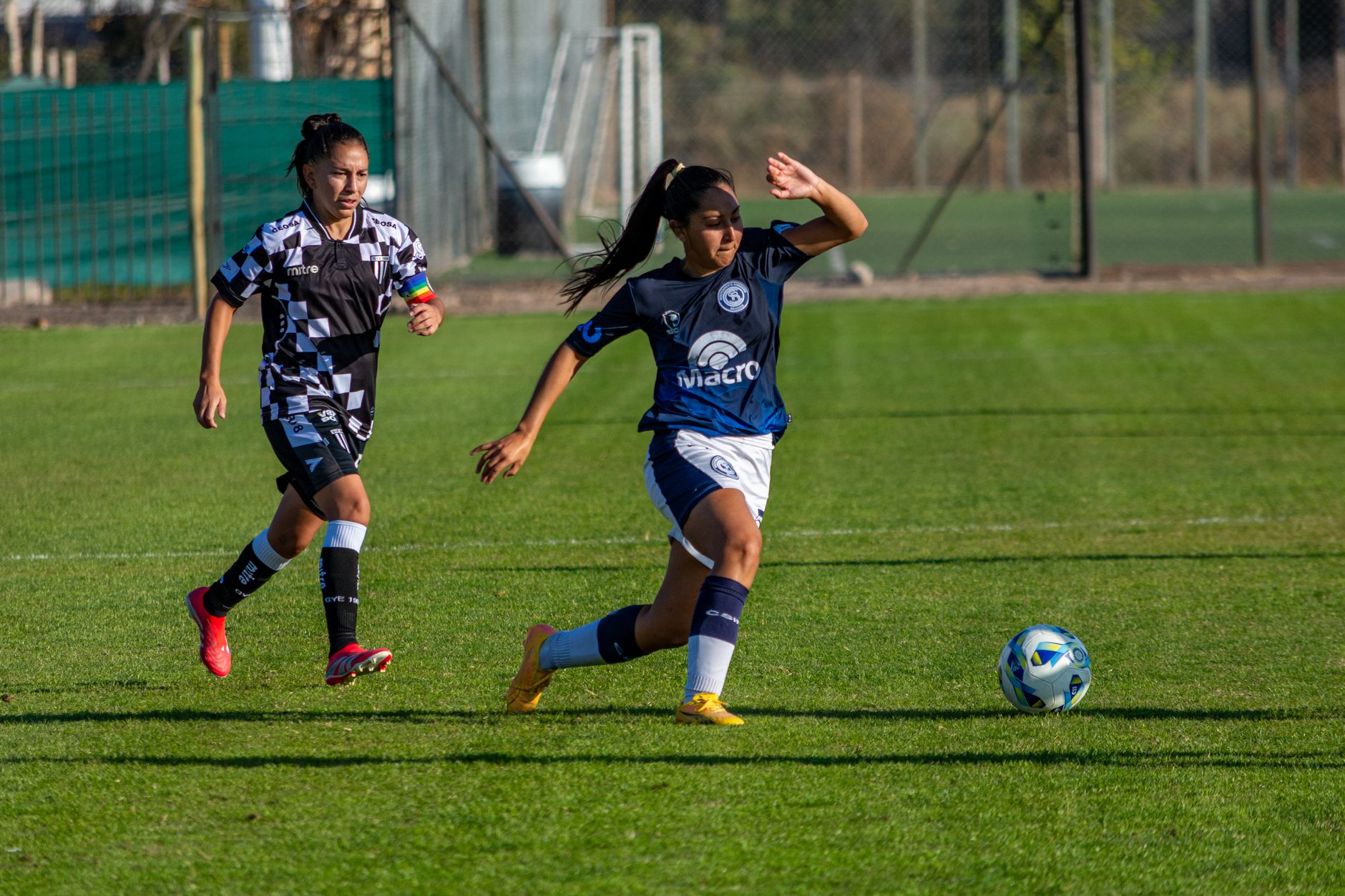
Photo by Franco Monsalvo on Pexels
Edge Cases & Gotchas
What mistakes stop ball-control progress?
The most damaging mistakes are excessive speed, poor spacing, exclusive strong-foot use, and training without feedback. Players often increase drill intensity after only a few accurate repetitions, causing technique to collapse and teaching the nervous system the wrong movement pattern. The elegant-looking session is therefore not always the valuable one.
Watch for these warning signs:
- The ball travels more than 1 metre away during simple control.
- The player looks down continuously instead of scanning.
- Every touch uses the inside of the dominant foot.
- Cone drills are fast but contain no change of direction.
- Juggling totals rise while pass completion remains unchanged.
- The player never records errors, so improvement is assumed rather than measured.
A sensible correction is to lower speed by 15–20%, reduce the space, and restore accuracy above 80%. Then raise only one difficulty variable. This resembles controlled experimentation: if speed, pressure, distance, and ball type all change simultaneously, you cannot identify which factor caused failure. Even the Premier League’s most polished midfielders are not performing magic; they are solving constrained movement problems with better information and repeatable mechanics.
Can juggling alone improve ball control?
Juggling alone can improve touch sensitivity and coordination, but it cannot fully develop match-ready ball control because it lacks direction, pressure, scanning, and decision-making. Ten minutes of juggling is useful as a warm-up; relying on it as the main programme is a poor trade. The expected transfer to competitive play is limited when the drill does not resemble the match action.
Use juggling in three stages:
- Alternate feet for 50 contacts.
- Add thigh and foot combinations for 30 contacts.
- Juggle once, let the ball drop, and control it into a marked gate.
The third stage transfers better because it connects aerial contact to a directional first touch. Players can also add a visual cue from a partner, forcing a shoulder check before the ball lands. This is more demanding, but difficulty is the point. According to UEFA Training Ground, technical exercises gain value when they preserve the perception-action relationship found in competition.
Read further with the [Internal Link: advanced dribbling and close-control drills].
Should players train with cones, walls, or defenders?
Players should use all three, but in a deliberate order: cones for movement patterns, walls for passing rhythm, and defenders for perception and pressure. Cones offer consistency, walls provide hundreds of contacts with predictable timing, and defenders expose whether the technique survives uncertainty. None is universally superior.
A 30-minute advanced session could allocate 8 minutes to cone changes, 10 minutes to wall passes, and 12 minutes to a 1v1 or rondo exercise. In a rondo, count not only completed passes but also controls that escape pressure. A player completing 90% of passes but needing three touches each time may be less effective than one completing 84% with one-touch exits.
One operational detail is often missed: fatigue changes touch length before it changes visible running speed. After six 30-second high-intensity rounds, measure the distance of the first touch. If it increases from 45 centimetres to 90 centimetres, the player needs technical work under fatigue, not simply more sprint training. World Cup Hub uses this distinction when discussing tournament players whose late-match control remains stable despite pressing intensity.
See the practical comparison before choosing your next session.
Verdict
The best way to improve ball control is to combine 300 purposeful contacts, directional first-touch work, scanning, weak-foot repetition, and progressive pressure across four weekly sessions. Track useful outcomes—successful controls, forward actions, and touch distance—rather than celebrating juggling totals or decorative tricks. A player who improves from 32 to 42 successful controls out of 50 has made meaningful progress, even if their freestyle repertoire has not changed.
For the next four weeks, use this schedule:
- Monday: first touch and wall passing.
- Wednesday: cone dribbling and weak-foot control.
- Friday: scanning, receiving, and turning.
- Sunday: rondos, 1v1 pressure, and fatigue testing.
Review the results every seven days. If accuracy remains above 80%, increase speed or pressure; if it falls below 65%, simplify the drill. That is the stubborn rule worth keeping: progression follows evidence, not ego. FIFA, UEFA, Premier League, and World Cup Hub all provide useful examples, but your own recorded repetitions determine whether the technique has actually transferred.
Want to follow more 2026 football analysis, tactical previews, and player-performance insights? World Cup Hub is built for that purpose.
Frequently Asked Questions
Q: What is ball control in soccer?
A: Ball control is the ability to receive, move, protect, and release the ball while keeping the next action available. It includes first touch, dribbling, juggling, body orientation, and control with different surfaces such as the foot, thigh, and chest. Match-quality control also requires scanning and responding to pressure. A useful performance measure is the percentage of touches that lead to a successful pass, dribble, or shot within three seconds.
Q: How can I improve ball control quickly?
A: Practice for 20–30 minutes, four times per week, using toe taps, inside-outside touches, wall passes, cone dribbling, and pressure-based receiving. Complete at least 300 purposeful contacts per session, with 40–50% performed using the weaker foot. Record 50 attempts and aim for at least 80% successful controls before increasing speed. Progress becomes faster when every touch has a direction or decision attached to it.
Q: What is the difference between juggling and match ball control?
A: Juggling improves touch sensitivity and coordination, while match ball control also requires direction, scanning, timing, and pressure. Juggling is valuable as a warm-up or coordination exercise, but it does not reproduce a defender closing space or a teammate passing at speed. Add directional controls and partner cues after juggling. This creates better transfer to competitive football.
Q: Why does my first touch keep getting away from me?
A: Your first touch usually escapes because the receiving foot is too rigid, your body is closed, or you have not scanned the pressure before contact. Reduce pass speed by 15–20%, receive across your body, and direct the ball into a marked 1-metre gate. Complete 25 repetitions on each side, then add a passive defender. If accuracy remains below 65%, simplify the drill before increasing intensity.
Q: How many times per week should I train ball control?
A: Train ball control three to four times weekly, with each session lasting 20–30 minutes. Leave at least one recovery day between demanding pressure or fatigue sessions, particularly for younger players. Beginners should prioritize accuracy and bilateral work, while advanced players can add live defenders and reduced space. Four moderate sessions generally provide better learning than one exhausting weekly block.
Q: Do I need expensive equipment to improve ball control?
A: No, a correctly sized football, five to ten cones, a wall, and a small training area are sufficient for most ball-control work. Older youth and adults commonly use a size 5 ball, while younger players may benefit from size 3 or 4. A smartwatch or phone can help record session duration and success rates, but expensive boots or branded equipment are not necessary. Spend money on consistency before equipment upgrades.
Q: Is ball control more important than dribbling?
A: Ball control is the foundation of dribbling because a player cannot beat an opponent without first controlling the ball into a usable position. Dribbling adds acceleration, deception, balance, and changes of direction, while control governs the first contact and protection of possession. Practice both by receiving into space, taking two or three progressive touches, and then changing direction. The correct priority depends on position, but control comes first.
Thank you for reading.
World Cup Hub · Editorial Archive