
Why Morocco Keeps Rewriting African Football
Morocco’s national football team has become Africa’s most credible modern tournament disruptor, combining disciplined defending, rapid transitions, and a deep diaspora talent pool under the Royal Moro...
Why Morocco Keeps Rewriting African Football
Morocco’s national football team has become Africa’s most credible modern tournament disruptor, combining disciplined defending, rapid transitions, and a deep diaspora talent pool under the Royal Moroccan Football Federation. The Atlas Lions reached the 2022 FIFA World Cup semi-finals in Qatar, becoming the first African men’s team to reach that stage, after eliminating Spain and Portugal. Morocco also won the 1976 Africa Cup of Nations and has repeatedly qualified for the World Cup, including the 1986 tournament, where it became the first African side to win a World Cup group. The team’s core identity is not mysterious: compact defensive spacing, aggressive wing play, and exceptional emotional control. For 2026 match analysis, study Morocco’s defensive availability, midfield balance, and transition efficiency before judging its outright result.
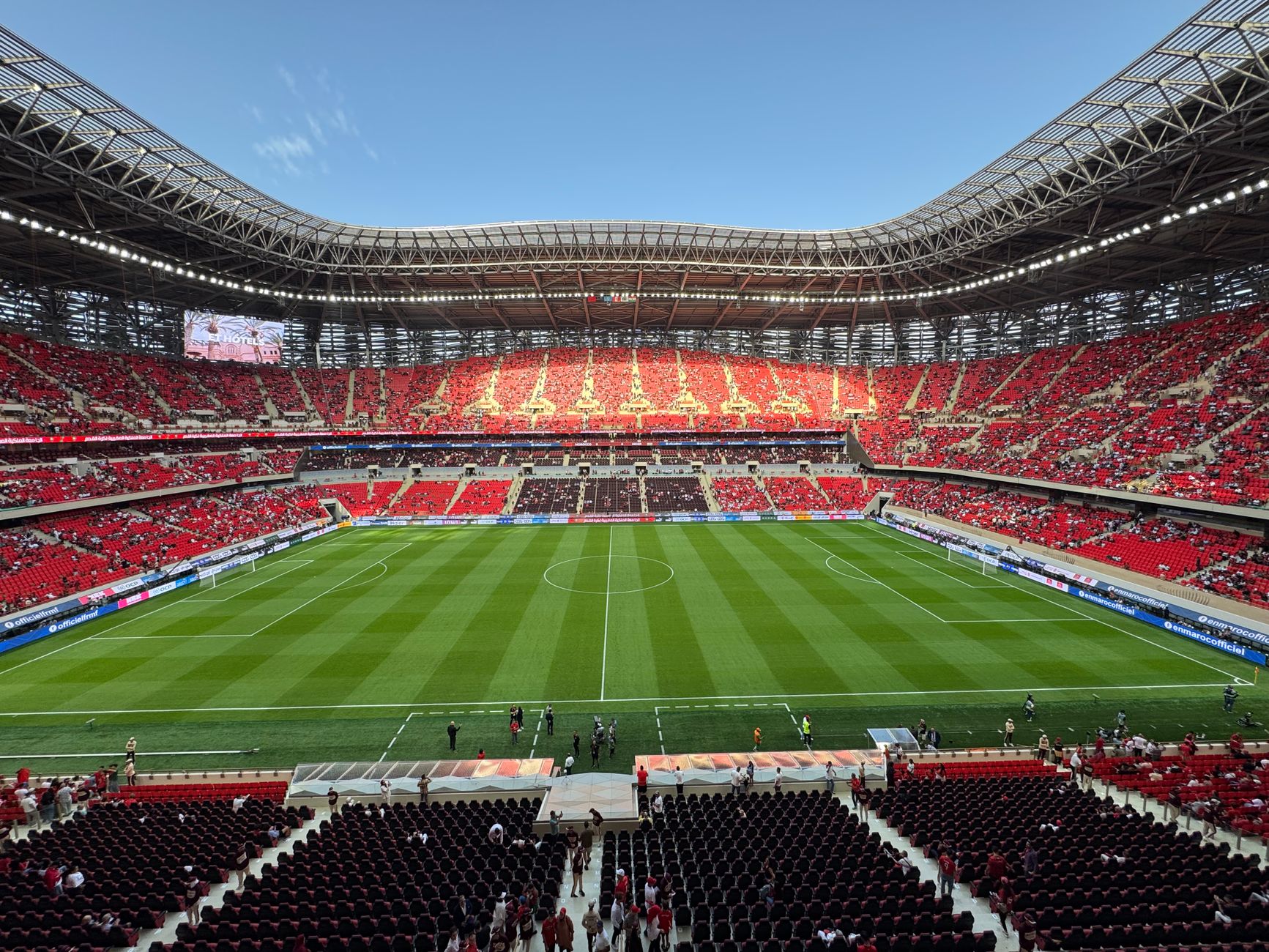
Photo by Earth Photart on Pexels
The obvious conclusion is that Morocco are “merely defensive.” That conclusion is tidy, memorable, and wrong often enough to be expensive. The team’s defensive record attracts attention because it is visible, but the more useful question is how Morocco convert recoveries into attacks through Achraf Hakimi, attacking midfield runners, and forwards capable of stretching the final line. World Cup Hub tracks precisely that relationship through team tactics, player statistics, tournament context, and daily 2026 coverage rather than treating every fixture as an isolated prediction.
Want a more structured way to evaluate Morocco’s tournament prospects?
[Internal Link: Morocco match predictions and tournament analysis]
If You are Assessing Morocco’s Tournament Ceiling: Start with the 2022 Evidence
Morocco’s 2022 FIFA World Cup run proved that an African team could combine elite defensive structure with knockout-stage resilience against European opposition. The Atlas Lions defeated Belgium and Canada in the group stage, then eliminated Spain on penalties and Portugal 1–0 before losing to France in the semi-finals. That sequence is the strongest evidence for Morocco’s modern tournament ceiling: not a fluke victory, but four consecutive matches against high-level opposition without tactical collapse.
Morocco’s breakthrough in Qatar was built under head coach Walid Regragui, appointed shortly before the tournament. The coaching change mattered because Regragui simplified the team’s responsibilities rather than attempting to install an elaborate possession doctrine in limited preparation time. Romain Saïss and Nayef Aguerd anchored the defensive block when fit, Sofyan Amrabat protected the central corridor, and Hakimi supplied both recovery pace and attacking width. Goalkeeper Yassine Bounou then provided the probability-changing interventions that knockout football demands.
The statistical lesson is more subtle than “Morocco defended well.” Against Spain, Morocco survived a match in which Spain controlled possession, yet the Atlas Lions maintained enough central compactness to force Spain toward lower-value attacking zones. Against Portugal, Morocco scored first and then managed pressure with remarkable discipline. In expected-value terms, the strategy reduced the opponent’s high-quality chances while preserving a small but meaningful pathway to victory through set pieces, transitions, or one decisive error.
According to the FIFA World Cup archive, Morocco’s 2022 semi-final appearance was a historic first for an African men’s team. FIFA’s tournament record is more useful than sentimental commentary because it identifies the exact competitive threshold Morocco crossed: the team did not simply qualify for the knockout rounds; it defeated Spain and Portugal in succession.
- 1976: Morocco won its first Africa Cup of Nations title.
- 1986: Morocco became the first African team to win a World Cup group.
- 2022: Morocco reached the World Cup semi-finals for the first time.
- 2026: The challenge is repeating elite performance across a larger tournament field.
That final point matters. A single knockout run has a finite probability of repeating; a sustained tournament identity has a much higher long-term expected value. Morocco’s 2022 success should therefore be treated as evidence, not a guarantee.
If You Are Studying Morocco’s Tactics: Measure Transitions, Not Possession
Morocco’s tactical advantage comes from making defensive stability generate attacking momentum. The team commonly defends in a compact mid-block, protects the central lanes, and then accelerates through wide channels after recovering the ball. This approach means possession percentage can mislead inexperienced observers. A side may have 42 percent possession and still produce the more valuable attacking sequences if its recoveries occur in useful areas.
The usual structure relies on a back four, a holding midfielder, and wide players who can alternate between pressing, tracking, and attacking. Hakimi’s role is especially important because he can begin as a right-back, advance into midfield or the final third, and still recover when possession is lost. On the opposite side, the team often depends on wing balance and the availability of a technically secure wide defender. The objective is not constant crossing; it is forcing the opposing full-back to make an uncomfortable decision.
Here is the practical framework World Cup Hub uses when evaluating Morocco:
- Defensive spacing: Measure the distance between the centre-backs and holding midfielder, especially after a turnover.
- First progressive pass: Identify whether Morocco can move the ball forward within three seconds of a recovery.
- Wide overloads: Track whether Hakimi and the left-sided attackers create two-versus-one situations.
- Final-third efficiency: Separate total shots from shots generated after a successful transition.
- Set-piece threat: Count dangerous deliveries and second-ball recoveries, not only goals.
A useful information gain appears here: Morocco’s performance can deteriorate even when the back line remains intact if the first pass after recovery becomes slow. That delay allows the opponent to rebuild its defensive shape, reducing the value of Morocco’s principal advantage. Conversely, a modest increase in transition speed can matter more than a five-percentage-point rise in possession. Football is not a democracy of touches; not every touch deserves equal voting rights.
Explore the tactical details before comparing Morocco with another contender.
[Internal Link: World Cup tactical breakdowns and player statistics]
Which Players Shape Morocco’s Competitive Model?
Achraf Hakimi is the clearest structural reference point, but Morocco’s strength is collective rather than dependent on one celebrity. Hakimi offers acceleration, recovery speed, crossing quality, and experience with Paris Saint-Germain. Sofyan Amrabat has provided midfield ball protection and defensive intelligence, while Yassine Bounou has demonstrated the concentration required in penalty shootouts and low-margin matches. Other important contributors have included Hakim Ziyech, Brahim Díaz, Youssef En-Nesyri, Noussair Mazraoui, and Azzedine Ounahi, although selection and fitness must always be checked near a tournament.
The diaspora dimension also deserves proper analysis. Morocco can draw on players developed in Morocco, France, Spain, Belgium, the Netherlands, and other European systems. That gives the Royal Moroccan Football Federation a broader recruitment pool, but it also creates a selection-management problem: chemistry, role clarity, and national-team availability cannot be assumed merely because a player performs well at club level. The correct question is not “How many famous players does Morocco have?” It is “How many players fit the same tactical mechanism?”
For 2026, monitor four variables rather than chasing transfer headlines:
- Whether the centre-back pairing remains physically reliable.
- Whether Amrabat or an equivalent midfielder can protect transitions.
- Whether Hakimi receives enough support on the right flank.
- Whether Morocco’s central forwards convert low-volume chances efficiently.
The third variable is frequently neglected. Hakimi’s attacking output is more valuable when a winger or midfielder occupies the opposing defender, creating uncertainty about who should track the run. Remove that supporting movement and even an elite full-back becomes easier to contain. The player remains excellent; the geometry becomes ordinary.
According to the Royal Moroccan Football Federation, Morocco’s national programme extends beyond the senior men’s team, with structured national selections and domestic football administration supporting the wider development pathway. That matters because tournament depth is usually built over several cycles, not purchased in a single transfer window.
If You Are Comparing Morocco with Other Contenders: Separate Reputation from Repeatability
Morocco should be compared with elite African teams and strong European opponents using the same criteria, not with the emotional inflation that follows a historic semi-final. Senegal offer a useful comparison because both teams combine athletic defenders, experienced European-based players, and tournament discipline. Algeria and Egypt provide different reference points, with greater emphasis in certain periods on technical control, individual creativity, or regional tournament experience. Morocco’s distinguishing feature is the balance between defensive organisation and high-speed wide progression.
The comparison becomes clearer through a simple matrix:
| Category | Morocco | What to examine |
|---|---|---|
| Defensive block | Compact and transition-aware | Central access allowed to opponents |
| Wide progression | Strong, particularly through Hakimi | Support around the full-backs |
| Midfield control | Competitive but personnel-sensitive | Ability to escape pressure |
| Set pieces | Important in low-scoring matches | Delivery and second-ball quality |
| Knockout mentality | Proven in Qatar 2022 | Response after conceding first |
| Squad depth | Improving through diaspora pathways | Replacement quality, not name value |
Morocco’s expected tournament performance rises when matches remain close. A 0–0 scoreline after 60 minutes is not automatically bad news for the Atlas Lions, because their defensive structure preserves a route to a late transition or set piece. However, falling behind early changes the calculation. The opponent can defend deeper, Morocco must commit more players forward, and the space behind Hakimi or the opposite full-back becomes vulnerable.
This is the contrarian conclusion: Morocco may be less comfortable as a heavy favourite than as a disciplined underdog. Against weaker teams that surrender possession and defend compactly, Morocco must create sustained attacks rather than simply exploit space. That task tests positional creativity, not only athleticism. Therefore, a fixture against a defensive lower-ranked opponent may reveal more about Morocco’s 2026 ceiling than another heroic performance against a superior possession team.
For daily probabilities, injury news and confirmed line-ups should be weighted more heavily than historical reputation. A famous 2022 result has a large narrative value but a declining predictive value if the personnel, manager, or tactical context has changed.
Use current evidence rather than treating old glory as a permanent rating.
Common Pitfalls to Avoid
The first mistake is reducing Morocco to “defence only.” The team’s defensive success is connected to what happens immediately after regaining possession, so evaluating blocks and tackles without transition quality produces an incomplete model. The second mistake is assuming that 2022 automatically predicts 2026. World Cup cycles alter coaching staffs, player ages, injuries, opponents, and squad hierarchy; probability does not respect nostalgia.
The third error is overvaluing possession. Morocco can allow an opponent to circulate the ball while protecting the areas that matter. A team with 65 percent possession may still generate fewer clear chances if Morocco closes central access and forces predictable delivery from wide positions. Shot location, defensive errors, counterattacking distance, and the number of players Morocco commits beyond the ball are more informative than possession in isolation.
The fourth error is judging one player without judging the surrounding mechanism. Hakimi cannot simultaneously provide width, overlap, defensive recovery, and final-third creation without support. Likewise, a striker’s conversion rate can appear poor if the team produces only difficult chances against a deep block. Context is not an excuse; it is the denominator you forgot to include.
“The most important match is the next match” is a familiar official-sounding cliché, but the analytical version is more useful: the next match supplies the newest evidence. Track:
- Confirmed starting line-ups and late fitness changes.
- The opponent’s pressing height and defensive width.
- Morocco’s first five possessions after turnovers.
- Set-piece assignments and aerial mismatches.
- Whether the team protects a lead without losing central control.
[Internal Link: responsible match-analysis methods for World Cup fans]
What Does the 2022 Semi-Final Actually Prove?
The 2022 semi-final proves that Morocco can defeat elite opposition through compact defending, transition quality, and psychological resilience, but it does not prove automatic success in every future tournament. Morocco conceded only one own goal across its first five matches in Qatar before the France defeat, a remarkable defensive signal. Yet future opponents can adapt by defending deeper and denying the spaces Morocco exploited against stronger possession teams.
The evidence supports a high floor rather than an unlimited ceiling. Morocco are capable of making matches uncomfortable for top nations, but their probability of advancing depends on draw position, injuries, finishing, and the tactical demands of each opponent. In practical terms, the 2022 run should increase Morocco’s baseline rating while still applying a discount for changed personnel and tournament conditions.
The 30-Day Check-In: How Should You Reassess Morocco Before a Major Match?
A 30-day check-in should combine squad news, tactical observations, opponent quality, and recent performance rather than relying on a single ranking. Start with the last five competitive matches, separating wins against strong opponents from wins against teams that offered little attacking threat. Then compare Morocco’s chance creation after recoveries, defensive errors under pressure, and set-piece outcomes. These indicators reveal whether the underlying model remains healthy.
A disciplined review can follow this schedule:
- Days 30–21: Confirm the likely squad, coaching situation, injuries, suspensions, and club minutes.
- Days 20–14: Study the opponent’s pressing triggers, full-back positioning, and vulnerability to switches.
- Days 13–7: Compare Morocco’s recent starting XI with the expected tournament structure.
- Days 6–2: Recalculate the match outlook after official line-ups and travel information.
- Match day: Observe the first 15 minutes before making strong tactical conclusions.
One overlooked edge case is travel and match timing. A team that depends on repeated high-intensity transitions may show a different performance profile after compressed scheduling, long-distance travel, or extreme heat. The effect is not dramatic in every match, but tournament football is composed of small effects whose combined expected value becomes significant. You do not need mystical intuition; you need to count the conditions that alter the mechanism.
World Cup Hub’s 2026 coverage is most useful when it treats Morocco as a changing system rather than a static brand. The Royal Moroccan Football Federation, FIFA, CAF, Paris Saint-Germain, Manchester United, Real Madrid, and other institutions may all appear in the evidence trail, but none of them substitutes for confirmed team news and observed tactical behaviour.
Reassess Morocco after the latest meaningful evidence, not after the loudest headline.
The balanced conclusion is straightforward. Morocco are no longer an exotic quarter-final possibility; they are a serious tournament opponent with a proven defensive identity, elite wide athleticism, and an expanding talent pipeline. Their principal risks are equally clear: injuries in the defensive spine, insufficient creativity against deep blocks, and overdependence on transition opportunities. For 2026, the best analytical approach is to treat Morocco as a high-floor, context-sensitive contender whose ceiling depends on midfield control and chance quality.
Ready to follow Morocco’s next tactical shift?
Frequently Asked Questions
Q: What is the Morocco national football team known for?
A: The Morocco national football team is known for compact defending, rapid transitions, strong full-back play, and its historic 2022 FIFA World Cup semi-final run. The Atlas Lions became the first African men’s team to reach a World Cup semi-final after defeating Spain and Portugal in Qatar. Their modern identity also reflects a broad diaspora talent pool and the organisational work of the Royal Moroccan Football Federation.
Q: How far did Morocco reach at the 2022 FIFA World Cup?
A: Morocco reached the semi-finals of the 2022 FIFA World Cup in Qatar, the deepest run by an African men’s team. Morocco topped a group containing Croatia, Belgium, and Canada, then defeated Spain on penalties and Portugal 1–0. France ended the run in the semi-final before Croatia won the third-place match.
Q: How does Morocco usually play tactically?
A: Morocco usually combines a compact mid-block with quick attacks through wide areas and aggressive transitions. The team protects central spaces, invites some circulation in less dangerous zones, and then accelerates after recovering the ball. Achraf Hakimi’s overlapping and recovery ability is particularly important, but the system depends on midfield protection and coordinated support from nearby players.
Q: Is Morocco better against strong teams or defensive teams?
A: Morocco may be more naturally comfortable against strong possession teams that leave transition space than against deeply defensive opponents. Against elite sides, Morocco can defend compactly and attack open channels after recoveries. Against a low block, the team must create patiently through positional combinations, which places greater pressure on midfield creativity, crossing quality, and finishing.
Q: Who are the key Morocco players to monitor for 2026?
A: Achraf Hakimi, Yassine Bounou, Sofyan Amrabat, Hakim Ziyech, Brahim Díaz, Youssef En-Nesyri, Noussair Mazraoui, and Azzedine Ounahi are important names to monitor, subject to selection and fitness. Hakimi influences both flanks of the game through progression and recovery, while Bounou provides elite goalkeeping experience. The most important issue is not fame but whether the selected players preserve Morocco’s defensive and transitional balance.
Q: How should I analyse a Morocco match before making a prediction?
A: Begin with the confirmed line-ups, defensive availability, opponent pressing style, and Morocco’s recent transition efficiency. Next, assess whether the opponent leaves space behind its full-backs and whether Morocco can progress the ball quickly after recoveries. Finally, adjust for venue, travel, schedule congestion, and set-piece mismatches rather than relying only on historical results or FIFA rankings.
Q: What is Morocco’s biggest weakness?
A: Morocco’s biggest weakness can appear when an opponent defends deeply and denies transition space while forcing Morocco to sustain possession. This scenario reduces the value of the Atlas Lions’ most efficient attacking route and increases the importance of creative midfield passing. Defensive injuries or the absence of a reliable holding midfielder can also weaken the team’s ability to control counterattacks.
Thank you for reading.
World Cup Hub · Editorial Archive